


Three Things to Do in Dublin in Late May 2026 (and Where You'll Need Signal)
Local Insights · Late May 2026
Three Things to Do in Dublin in Late May 2026 — and where you'll need signal.
Late May is a quiet sweet spot in Dublin. The evenings stretch past nine, the Forty Foot is finally warm enough to get into, and the city has not yet filled with the summer crowds that arrive around Bloomsday in mid-June. If you're visiting in the last two weeks of May 2026, you have something the high-season visitor doesn't: room to wander.
This is a short list — three places we'd actually send a friend who asked. A sea swim at sunrise, a UNESCO biosphere reserve ten minutes from the city, and a working whiskey distillery in The Liberties. We've also included current mobile coverage data from ComReg's outdoor coverage map for each spot, because Dublin's signal map is more uneven than first-time visitors expect. A 4G connection that works perfectly in Temple Bar can drop to a single bar on a sandbank in Bull Island, and the difference between Vodafone, Three, and Eir at the same coordinates can be significant.
Sea Swim · 40 mins from City Centre
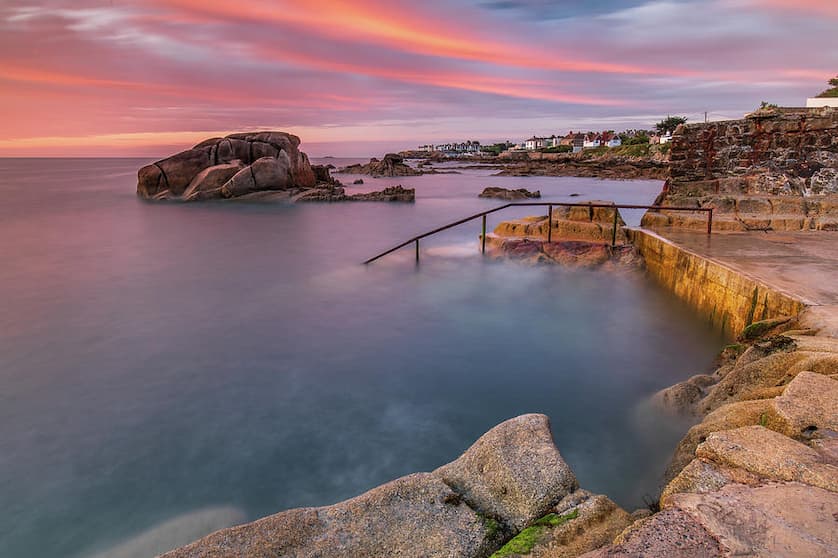
1. Forty Foot at Sandycove
A 250-year-old swimming spot at the southern tip of Dublin Bay, past Joyce's Martello tower and the cluster of houses that Leopold Bloom walked past on the way down to the water. The Forty Foot has been a daily ritual for generations of Dubliners. The sea is around 13°C in late May — cold by Mediterranean standards, but you walk away from it feeling reset in a way that nothing else quite delivers.
How to get there. Take the DART (Dublin's commuter rail) from Pearse, Tara Street, or Connolly to Sandycove & Glasthule. The journey is around 40 minutes from town centre and trains run every 10–15 minutes. From the station it is a five-minute walk down to the water through quiet residential streets. There is no admission fee. The Forty Foot is open to all, year-round, 24 hours a day.
What to bring. A robe, a flask of tea, and a towel you don't mind getting salty. There are no changing facilities and no lifeguard. The steps and rocks get slippery — walking shoes off, sliders on for the approach if you have them. Locals start arriving from about 6am; by 9am at the weekend you'll have company.
💡 Local tip. Sundays get busy with the regulars and their grown-up children. Saturday around 7am you'll mostly have the steps to yourself, and the early light over Dalkey Island is the reason people keep going back. Pair it with breakfast at Cavistons in Glasthule on the walk back to the DART.
📶 Signal note. ComReg's January 2026 data shows Vodafone 4G at "Fair" in the Sandycove area, while Three and Eir both show "Good". In practice that means Vodafone users will see one or two bars on the rocks themselves, enough for messages and maps but not video upload. Three and Eir customers do better. If you're on a foreign SIM that roams onto Vodafone Ireland (common with several US and EU carriers), expect the same Fair coverage.
Walk + Lunch · 15 mins from City Centre
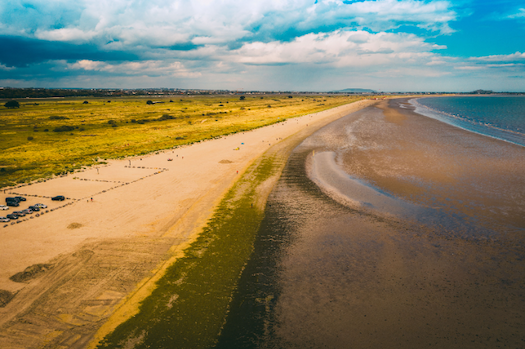
2. Bull Island & The Happy Pear
A causeway out to a UNESCO biosphere reserve, fifteen minutes by car from O'Connell Street. North Bull Island is a sandbank that has been growing since the early 1800s, when the construction of the Bull Wall changed Dublin Bay's currents. It now hosts brent geese, skylarks, terns, and the occasional grey seal that hauls out on the sandbank near the wooden bridge. The full length of the island is about five kilometres. You can do a satisfying out-and-back walk in 90 minutes from either causeway.
How to get there. Drive (free car parks at both causeways) or take the 130 bus from Lower Abbey Street to Clontarf and walk across the wooden bridge — about 20 minutes from the bus stop. There's also a Dublin Bikes station nearby. Bull Island is open daily, free entry, dogs allowed on leads.
What to do with the rest of the day. If you have a car, drive twenty minutes south down the coast road to Greystones for lunch at The Happy Pear. Technically in Wicklow rather than Dublin, but the drive along the coast through Dún Laoghaire and Killiney is one of the best short trips out of the city. Allow half a day for the full Bull Island + Greystones combination.
💡 Local tip. Screenshot the bird guide and the map of the island before you set off. The car park at the wooden bridge fills up by 11am on sunny weekends in May, so arrive before 10 or after 2. Spring tide times are worth checking — at very high tide, the saltmarsh end of the island floods and walking it becomes harder than it looks on a map.
📶 Signal note. ComReg's data shows Vodafone at "Fair", Three at "Good", and Eir at "Fair" on the island itself. The interpretive centre area is the strongest spot. Out on the dunes and around the saltmarsh, expect coverage to drop further — there are no cell sites on the island itself, so you're working off the mainland transmitters across the bay. This is the spot on this list where having a backup connection matters most, especially if you're using mapping apps to find specific birding hides or beach access points.
A pocket-sized 4G hotspot pulls from whichever Irish network is strongest at your location — so you stay connected from Forty Foot to Greystones, even where any single carrier drops to Fair.
Old Quarter · 20 mins on foot from Trinity
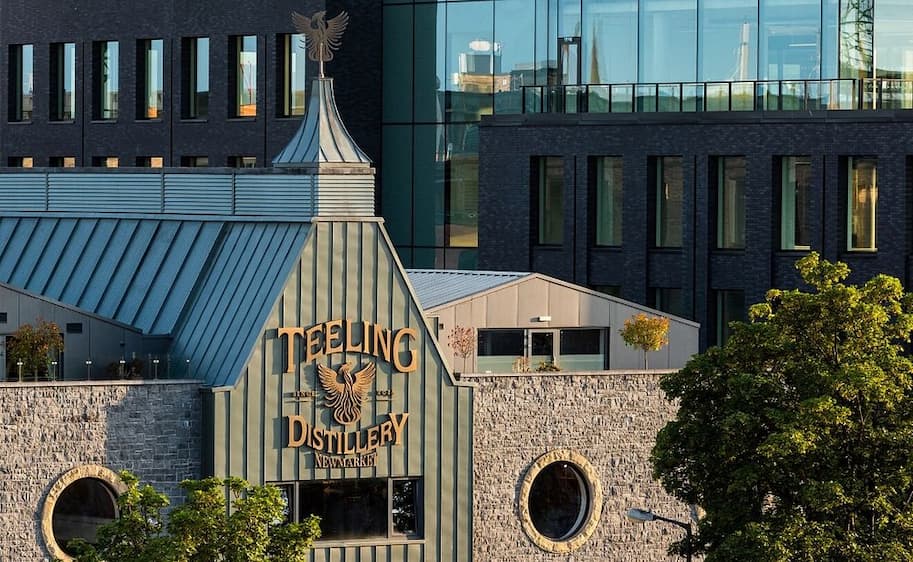
3. Teeling Distillery, The Liberties
Dublin's first new whiskey distillery in 125 years, opened in 2015 in Newmarket Square — the same square where Dublin's gin and whiskey trades have been based since the 17th century. The Liberties is Dublin's original distilling quarter; Jameson, Powers, and Roe & Co all started within a mile of where Teeling now stands. After more than a century of consolidation that left only the giants standing, Teeling represents the return of small independent distilling to the city centre.
The tour. About an hour, takes you past the three copper pot stills (named Alison, Natalie, and Rebecca after Jack and Stephen Teeling's daughters), through the mash and fermentation rooms, and finishes with three drams in the tasting room. The standard tour is €20. The Reserve tasting is €30 and adds a 24-year single malt to the lineup — worth the extra tenner if you have any interest in older Irish whiskey, which is rarer than it should be.
How to get there. From Trinity College, it's a 20-minute walk west through some of the oldest streets in Dublin — across Dame Street, past Christ Church Cathedral, down Patrick Street, and into The Liberties proper. Or take the LUAS red line to Four Courts and walk south for ten minutes. Last tour is usually at 5:30pm; bookings are strongly recommended on weekends, especially in late May when domestic Irish weekenders start filling the slots.
💡 Local tip. If the weather turns — and it will, this is Ireland — this is the move. The walk west through the old streets is more interesting than the LUAS, and the surrounding neighbourhood has gone through a quiet renaissance. Stop for a pint at the Open Gate Brewery (Guinness's experimental tap room, ten minutes south) or for coffee at Two Pups on Francis Street on the way back.
📶 Signal note. All three carriers — Vodafone, Three, and Eir — show "Very Good" 4G outdoors at Newmarket Square. Once you're inside the distillery, the lower rooms and the warehouse area drop significantly: thick stone walls and below-ground spaces aren't friendly to mobile signal. If you have a tour booked, screenshot or download your QR code ticket before you arrive. The same applies to most of the pubs and historic buildings in The Liberties — outdoors is reliable, indoors gets patchy.
Mobile Coverage Around Dublin: What to Expect
Dublin city centre has excellent 4G coverage across all three major Irish networks. The story changes the moment you head toward the coast or out to the surrounding bay. Sandycove, Bull Island, and several of the more interesting day-trip locations on the city's edge sit in Fair coverage zones on at least one network — usually Vodafone, occasionally Eir. Three tends to perform best on the coastal fringes east of the city.
This matters because most travellers don't know which Irish network they're roaming on until they arrive. A US AT&T traveller might be auto-assigned to Eir; a UK EE customer might land on Vodafone Ireland. Either way, your experience at the Forty Foot or on Bull Island will reflect that network's local strength, not your home carrier's reputation.
ComReg, Ireland's communications regulator, publishes an official outdoor coverage map updated periodically through the year. You can look up any specific address before you travel and see the predicted 2G, 3G, 4G, and 5G coverage for every Irish network. We've included the relevant data above for each of the three picks. For anywhere else you might be heading, check the ComReg coverage map or our own Ireland coverage page.
Frequently Asked Questions
Is late May a good time to visit Dublin?
Yes — arguably the best time. Daylight stretches to almost 16 hours, average daytime temperatures sit around 15–17°C, and the city is meaningfully quieter than it will be from Bloomsday (16 June) through August. Sea temperatures are starting to climb, gardens are at their peak, and you can usually walk into restaurants without a booking on a weekday evening.
Do I need to book Teeling Distillery in advance?
On weekdays you can often walk in. On weekends, especially Saturday afternoons, the standard tour is regularly fully booked by mid-morning. Reserve tasting slots are smaller and sell out faster. Booking 48 hours ahead is enough most of the time.
What's the best Irish mobile network for visitors?
There isn't a universally best answer — coverage varies geographically. Three tends to perform best on the east coast and in central Dublin. Vodafone has the broadest national footprint but shows weaker coverage on the coastal fringes east of the city. Eir is the third major carrier and is strong in most urban areas. If you don't want to pick, a portable WiFi device that switches between networks based on signal strength removes the question.
How cold is the Forty Foot in May?
Around 11–13°C in late May, climbing a degree or two by the first week of June. By Irish sea-swimming standards this is comfortable; by Mediterranean standards it is bracing. A neoprene cap helps the first few minutes; after that most people stop noticing. Locals do daily 10-minute dips year-round, including in February at 8°C.
Can I get to all three of these places by public transport?
Yes. Forty Foot is a direct DART ride. Teeling is a 20-minute walk from Trinity or a short LUAS ride. Bull Island is the trickiest — the 130 bus from Lower Abbey Street gets you to Clontarf, then it's a 20-minute walk across the wooden bridge. If you're planning to combine Bull Island with Greystones for lunch, a car or rideshare makes the day work better.
Before you go
One less thing to think about.
Three spots, one weekend, and one device that handles all of it. Directions out to Sandycove at 6am, the photo dump from Bull Island that won't send on patchy mobile data, the QR code for your Teeling tour that won't load in the basement. WiFiCandy gives you one pocket-sized 4G hotspot for the whole trip: unlimited data on whichever Irish network has the best signal at your location, up to 10 hours of battery, up to 8 devices connected. Pick it up at the Dublin Airport T2 SPAR (open 24/7), or have it delivered to your hotel before you arrive.
From €11/day in Ireland. All taxes included. No deposit, no damage fees.
Already in Dublin? Walk up at SPAR T2, open 24/7 →
From Dublin, with grain.
The WiFiCandy team